
Start with one workflow when the board wants proof first.
A volunteer board does not need to move everything on day one. HOA Guardrail can start with one board workflow, safe evaluation data, officer training, and a clear review before broader rollout, while aligned boards can move faster when scope is explicit.
No credit card required. Use sample data first. Invite homeowners later.
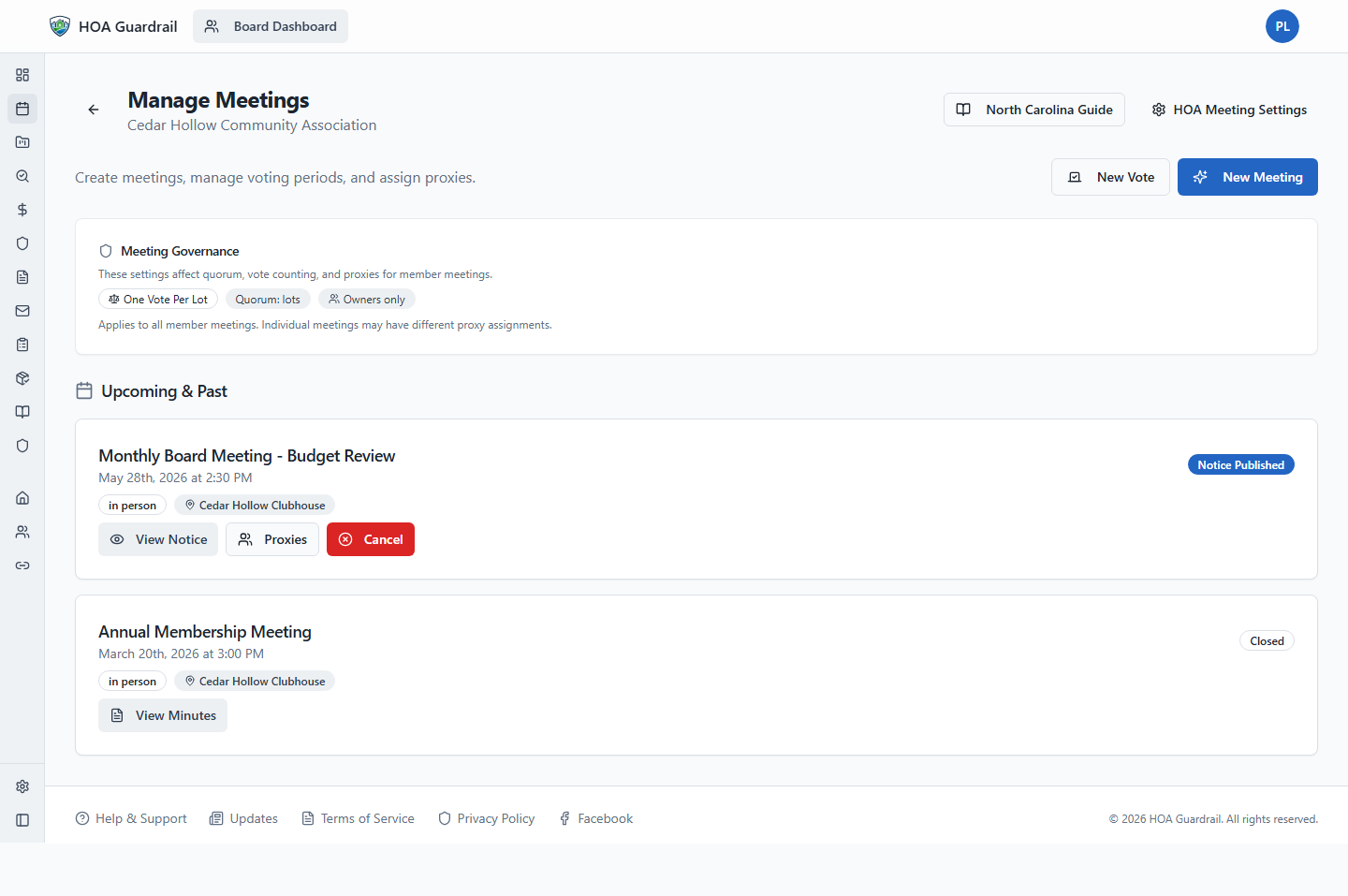
Meetings and minutes
Agenda packet, notice snapshot, quorum, motions, votes, chair prompts, minutes, and official-record designation stay tied together.
Pilot timeline
A confidence path your board can approve.
The goal is confidence, not a rushed migration. Each step should make the next board decision easier.
Kickoff
Pick the board problem
Name the first workflow and the board members who need to see it.
Week 1
Configure safe data
Use sample or limited non-sensitive records so evaluation can start without a full migration.
Week 2
Train the officers
Walk through the workflow with the president, secretary, treasurer, committee chair, or records custodian involved.
Week 3
Run or rehearse
Use the workflow for a real upcoming board process or rehearse it with Cedar Hollow sample data, including meeting notice and record-package checks when relevant.
Week 4
Board review
Review what changed, what stayed manual, and whether a broader rollout makes sense.
Choose the first workflow
Pick the board work that needs the most order.
The first pilot should be focused enough to succeed and meaningful enough for the board to feel the difference. For many boards, that is the next meeting: agenda packet, notice evidence, quorum, motions, minutes, approval, and official record.
Run the next board meeting
Agenda packet, notice evidence, quorum, Robert's Rules prompts, motions, votes, minutes, and the official meeting record.
Organize official records
Governing documents, minutes, policies, contracts, insurance, and board packets in one library.
Set up dues and ledgers
Opening balances, owner ledgers, A/R aging, budget reports, and treasurer review.
Track one violation workflow
Report, verification, notice, owner response, hearing, decision, and closure.
What waits until later
The pilot should not make the board feel trapped.
These items can be delayed until the board has seen enough proof and approved the next step.
What the board reviews after 30 days
Did this reduce scattered work?
Could nontechnical board members follow the workflow?
What training did officers still need?
What should homeowners see, and when?
Is the subscription worth bringing to a vote?
Want to choose the right first workflow?
Start with a walkthrough, sample data, and one workflow your board can understand before approving a broader rollout.